Blaufränkisch as a Great Red Grape Variety
Wine experts and journalists from around the world travelled to the gourmet village of Lech to analyse Blaufränkisch and define its potential on the international fine wine market during a full-day workshop as part of the "Arlberg-Weinberg" event series.
Yes
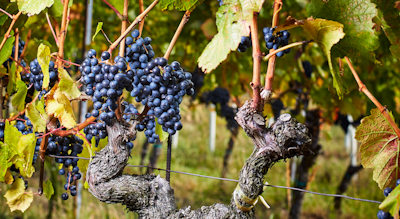
The headline finding first: Blaufränkisch is unanimously recognised as a great red grape variety of the world , meeting the parameters expected of an exceptional red wine, including ageing potential, reflection of terroir, complexity, distinctiveness, and finesse.
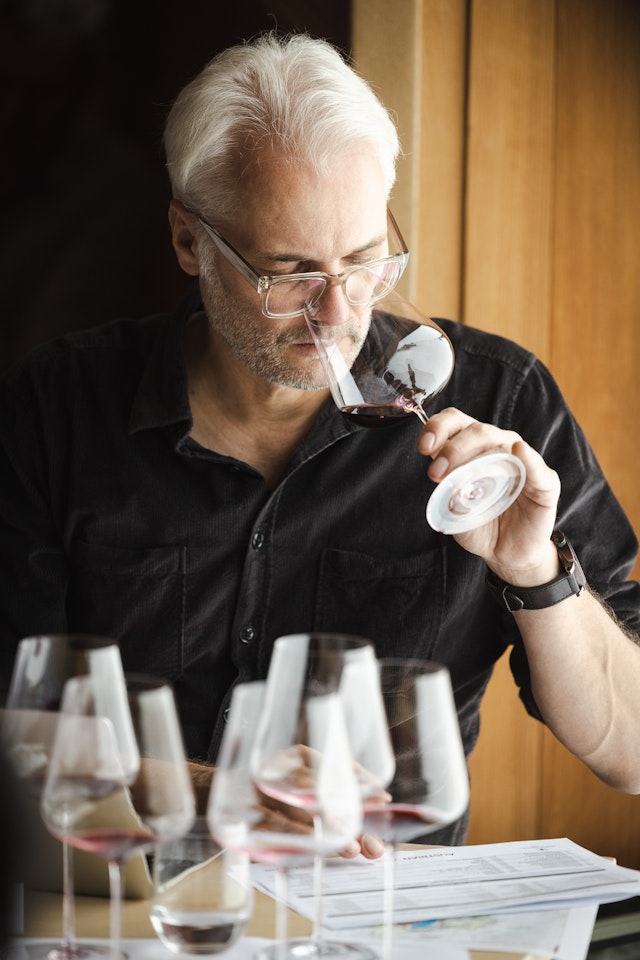
After a tasting of more than 50 top Blaufränkisch wines from 17 different producers across the 1986 to 2020 vintages, the jurors agreed on the following varietal description:
"Freshness and acidity with precise fruitiness and a tightly woven body. The aromas correspond to those of dark berries, alongside a smoky spiciness, and show notes of dried herbs."
David Schildknecht (Vinous, USA) added: "What distinguishes Blaufränkisch in particular is a freshness and liveliness usually found only in white wines."

A Mirror of its Origin
What the jurors confirmed again and again during the tasting is the talent of Blaufränkisch to reflect its origin while taking itself back. "A great wine," said Sascha Speicher (Meiningers Sommeliermagazin, DE), "first shows me its terroir. If I recognise the grape variety first, it is not a great wine." Harald Scholl (Magazin Vinum, CH) added: "Historic great wines have always been defined by their origin and appellation, never by the variety."
Distinctive Freshness and Finesse
Blaufränkisch also benefits from its unmistakable acid structure, which can give it a high degree of freshness and finesse. Rene Langdahl (DK) explained: "Today, freshness is the decisive quality that allows us to classify a wine as great. Thirty years ago this was not the case, as producers often had to worry about achieving full ripeness at all. In many wine regions, estates suffer from overly opulent wines. Blaufränkisch has the capacity to show this freshness even in hot, very dry years, which comes from a certain verticality in the wine's structure and a refined, slightly bitter character."
Current Development "Perfect for Blaufränkisch"
In general, the experts warn against producing powerful, over-extracted, oak-heavy wines. "Today we are seeing a strong reverse movement, away from wines with overripeness," Jamie Goode (wineanorak, UK) described the development in the international wine industry. "Producers are learning ever better to work with the vines so that they achieve perfect ripeness without going to overly high alcohol levels. We live in very interesting times, perfect for the talents of the Blaufränkisch variety."
J amie Goode put it pointedly: “If you make a wine with 15% alcohol and a lot of new oak, there is no matter which varietal you use, it is just sh…”
Great Ageing Potential
The experts also examined another marker of a great grape variety: its ageing potential. "I have never drunk a Blaufränkisch that was better in its first ten years than afterwards," explained Clemens Riedl of trinkreif , one of the organisers of the event. "Blaufränkisch simply needs ten years of development, at least at the level of single-vineyard wines."


"Only We Can Do This"
For Blaufränkisch to produce origin-typical, finesse-rich, age-worthy wines, winemakers must work with the highest quality standards. This begins in the vineyard, where yields must be significantly reduced (max. 3,500 kg / ha) to produce top-class wines. This understanding has reached many estates, leading to a generally high quality of Austrian red wines. According to David Schildknecht, a new self-confidence has also emerged: certain wine styles, including those from Blaufränkisch, can only originate in Austria. "There is a clear trend from 'We can do that too' to 'Only we can do that'."
The Blaufränkisch Summit was organised as a joint event by trinkreif , Lechzürs Tourismus, Hotel Almhof Schneider, and Österreich Wein Marketing GmbH.
Participants:
-
Marc Almert, Sommelier World Champion, Baur au Lac, CH
-
Willi Balanjuk, wine journalist, A la Carte, AT
-
Philipp Braun, food journalist, Oberösterreichische Nachrichten, AT
-
Ivan Carvalho, food journalist, Monocle, IT
-
Sara Døscher, wine journalist, VG, NO
-
Romana Echensperger MW, wine writer, DE
-
Joshua Greene, wine journalist, Wine & Spirits, USA
-
Jamie Goode, wine journalist, wineanorak.com, UK
-
René Langdahl, wine journalist, renelangdahl.com, DK
-
Linda Perez, wine journalist, Svenska Dagbladet, SE
-
Stephan Reinhardt, wine journalist, Robert Parker Wine Advocate, USA
-
Jancis Robinson MW, wine journalist, Financial Times, UK
-
David Schildknecht, wine journalist, vinous.com, USA
-
Jürgen Schmücking, food journalist, GaultMillau, AT
-
Harald Scholl, food journalist, Vinum, CH
-
Sascha Speicher, wine journalist, Sommeliermagazin, DE
-
Roland Graf, Trinkprotokoll, AT
-
Gabby Stone, wine journalist, Drinks Business, UK
-
Pauline Vicard, wine analyst, Areni, UK
-
Elena Rameder, sommelière, trinkreif, AT
-
Roland Velich, winemaker, AT
-
Clemens Riedl, wine merchant, trinkreif, AT
As well as the sommeliers and sommelières of the following restaurants in Lech Zürs:
-
Josef Neulinger (Almhof Schneider)
-
Anna Kleinle (Arlberg)
-
Martin Prodinger (Sandhof)
-
Markus Winkler (Aurelio)
-
Günther Meindl (Berghof)