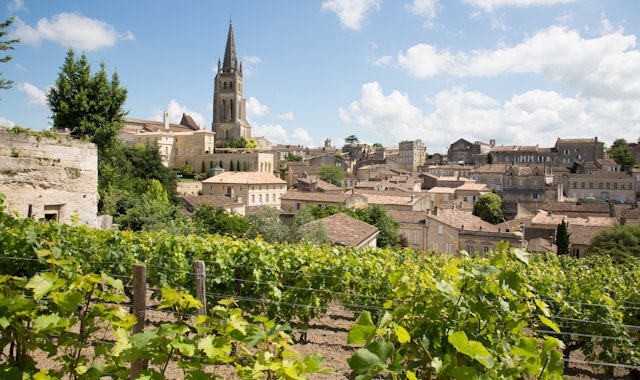
Bordeaux. Now.
FOCUS 2026
Bordeaux is among the great constants of the wine world. And perhaps that is currently part of the problem. Much has been written about Bordeaux in recent years, rarely with enthusiasm. Declining sales, overproduction, shifting drinking habits, and climatic challenges have shaped the picture. Some commentary even speaks of a region losing relevance, or one that needs to redefine its place in today's wine market.
The developments behind this are real. According to the Conseil Interprofessionnel du Vin de Bordeaux (CIVB), exports are declining in important markets, and programmes have recently been introduced to reduce vineyard area in order to address structural surpluses. At the same time, market analyses show that younger consumers in particular are moving towards lighter, more accessible wines.
None of this is wrong, but it falls short.
While parts of the market are under pressure, something else is happening at the same time: Bordeaux is changing, quietly but consistently. Stylistically, structurally, and in self-perception. Alcohol levels are thought through more deliberately, extraction is being reduced, freshness and precision are moving more firmly into the centre. In parallel, work in the vineyard has developed significantly. According to CIVB, around three quarters of the vineyard area is now managed sustainably, a growing share of it organically or biodynamically. This is not a revolution, but it is a movement. And this is where it becomes interesting.
A further, often overlooked aspect is the qualitative development of recent vintages. Initial feedback from the En Primeur week in April 2026 indicates that the 2025 vintage is qualitatively very promising, with a style that many tasters describe as balanced, precise, and accessible. Voices such as Neal Martin and Antonio Galloni have noted in their first reports that Bordeaux is increasingly producing wines that combine classical structure with greater freshness and earlier drinkability. This fits the picture as well.
We have decided to place a focus on Bordeaux in 2026, not despite these developments but because of them. We are convinced that great wine regions should not be measured by how they were in their best phase, but by how they handle change. And Bordeaux is a region that has been doing exactly that for decades. Perhaps not loudly, but often sustainably.



Neal Martin, one of the most established Bordeaux specialists of our time, accompanies us through these days. For more than 30 years, he has engaged with the region and has followed its development at close range, analytically, critically, and with an exceptional eye for detail. Together with him, we approach Bordeaux from different perspectives:
DAYTIME EVENTS
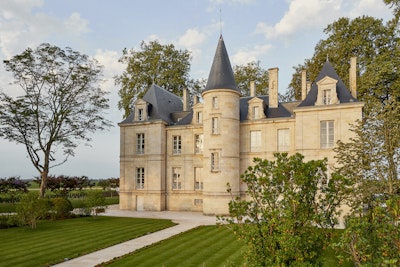
At the Grand Opening Tasting, three estates are at the centre that stand for the classical strength of the region: Château Pichon Longueville Comtesse de Lalande, Château Figeac, and Château L'Église-Clinet. In the panel discussion 'Quo Vadis Bordeaux', the larger questions are addressed: climate change, market shifts, new style. What is happening now, and what does it mean for the future? The tasting '…and yet it moves' looks deliberately forward, with estates such as Claire Lurton, Château Haut-Bages Libéral, Château Ferrière, Château Durfort-Vivens, and Château Smith Haut Lafitte, which stand exemplarily for a new reading of the region.
The programme is complemented by three evening events that bring outstanding enjoyment together with great wines of the region:
EVENING EVENTS
Our programme is not an attempt to explain Bordeaux but an invitation to look at it anew. Not as a myth of the past, and not as a problem case of the present, but as a region in motion. We believe that now is the right moment to look more closely.